Is a seam opening, an edge curling up, or the whole yard looking tired? Artificial turf repair covers all of it, from one seam to pulling up a worn-out lawn and starting over. If someone else put your turf in, we can still come out and look at it.
Most turf problems begin in one place, such as a lifted edge, a seam that has opened or a dip that holds water after rain. Fixing that one place is generally a smaller job than waiting for the trouble to spread.
We come out, look at the damage and what caused it, and give you a free quote. Sometimes the fix is a patch, and sometimes the trouble is in the base under the turf.
Call 972-843-9703 or use the form. Having a photo or two on your phone makes the problem easier to describe.
Free quote. No obligation.
Spring storms add their own trouble: falling limbs, piles of debris and heavy runoff that can lift a loose edge. After a bad one, clear off branches and walk the seams and borders.
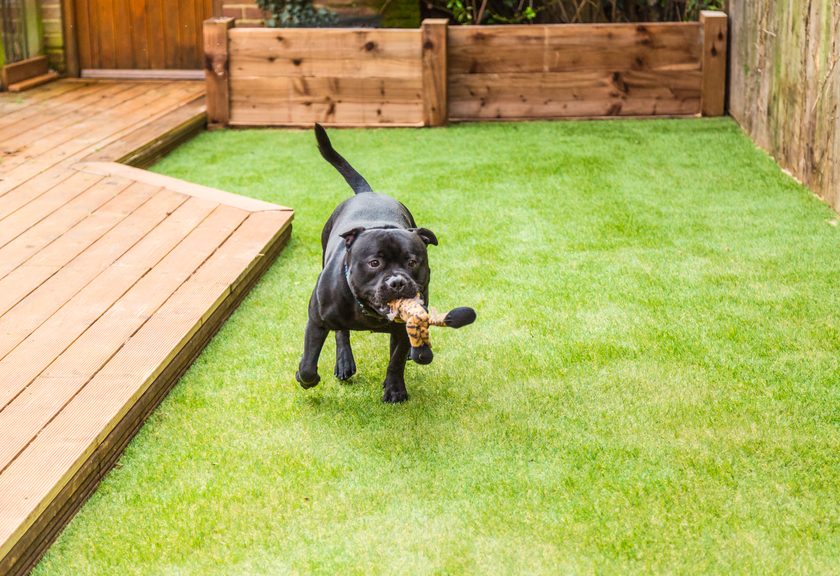
Dogs bring wear of their own. Infill breaks down in a favorite spot, the seam nearest the back door takes a pounding, and a determined digger can open an edge in one afternoon.
An opened seam is generally folded back, cleaned and joined again with new seam tape and adhesive, with the fibers kept out of the glue line.
A lifted edge is fastened back to its border. If the border has moved or broken, that gets fixed first.
A damaged section is cut out and a new piece is fitted in, with the grain running the same way as the turf around it. Spare turf from the original install is the best match, so mention it if you kept any.
For a dip, a hump or a puddle, the turf is peeled back, the base is rebuilt and packed again, and the turf is laid back down. Drainage trouble that reaches past one spot may call for more base work.
Turf that simply looks tired may only need a deep cleaning, a brushing and fresh infill, with no repair at all.
Artificial turf repair makes sense when the turf itself is in decent shape and the problem is local: a seam, an edge, a patch, a single low spot.
Replacement makes more sense when the fibers are worn down across the yard, the backing has gone brittle and tears when handled, or the base under most of the turf was poorly built. Turf that has spent many summers in the Texas sun can reach that point.
Replacing old turf follows the same steps as a new lawn, which the artificial grass lawns page describes, with the old turf and infill removed first. The home page walks through those steps, and dog areas have their own notes on the pet turf page.
If you also have a green that has lost its roll, the putting greens page explains how they are built.
Repairs are priced by what is wrong and what caused it, so we look before quoting. The visit is free. What changes the number:
Call 972-843-9703 to arrange a visit, and show us every spot that bothers you.


Yes, we can come out and look at it. Knowing the product name, or having leftover pieces from the original job, helps with matching.
A patch cut in with the grain running the right way, using matching turf, is hard to pick out. New turf can look a little brighter until it weathers. A spare piece from the first install gives the closest match.
Most often because the base under that spot has settled, was graded wrong, or sits on clay that holds water. The fix is generally in the base, not the turf.
Expansive clay swells as it takes on water and shrinks back as it dries, and the base on top of it can rise and settle along with it. One raised or sunken spot is often a base repair, while movement across the whole yard points to a drainage question worth a closer look.
Often it is. Turf you inherited with a house tends to come with no product name and no record of the base. A look at the seams, the edges and the way water drains shows whether it needs a few repairs or is near the end, and that is worth knowing before a small problem spreads.
Something wrong with your turf? Call 972-843-9703 or use the form.
Rather talk it over by phone? The contact page has the number, and the home page covers brand-new installs.