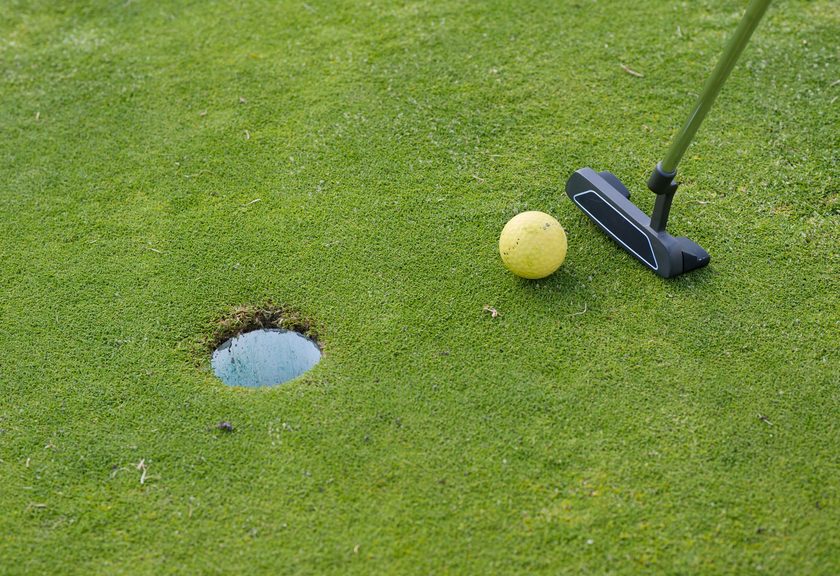
A single cup in a strip beside the house, or several holes with a fringe around them: backyard putting greens come in both sizes, and Plano Turf Co. quotes either one for Plano homes.
A green is a different build from a lawn. The turf is short and dense, the base is smoothed and packed more carefully, and gentle contours can be shaped in so putts break. Every flaw in the ground shows once a ball rolls over it.
Bring your ideas to the visit: how many cups, where you would stand to putt, whether you want to chip onto it. We look at the space, and you get a free quote.
Planning turf for the rest of the yard too? The artificial grass lawns page covers that, and the pet turf page is for the dog’s corner.
Call 972-843-9703 or send the form.
Free quote. No obligation.
Golfers get the most use from one. Putting is the part of the game easiest to work on at home, and a green by the back door gets used on ordinary weeknights.
Backyard putting greens also put hard-to-use ground to work. A side yard too narrow for a patio, an odd corner past the pool, or a strip behind the garage can hold a practice green.
A green does not have to be large to be useful. A few paces of turf with a cup and a slight break, in a corner that was doing nothing before, can keep a putting stroke in shape through the winter.
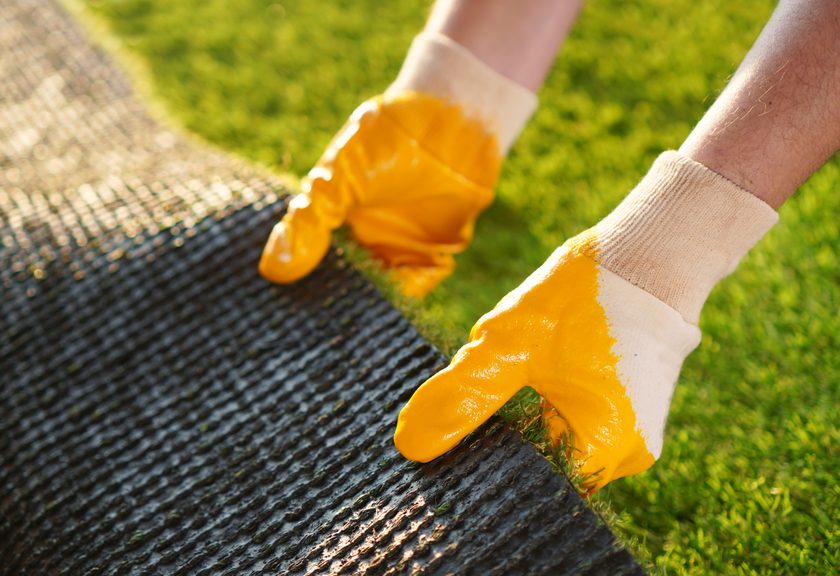
The old grass and soil come out, and a base of fine aggregate goes down in thin layers, each one compacted. The top is smoothed with more care than a lawn base gets, because the ball reads every bump.
Gentle slopes and breaks are shaped into the base before the turf goes on. A flat green is simpler to build, while a green with some movement is more interesting to practice on.
Putting surfaces use short, tightly packed fibers. Many greens are ringed with a band of longer turf that acts as a fringe and a place to chip from.
Holes are cut for the cups, and sand infill is generally brushed in to set how the ball rolls. More sand or less changes the pace of the green.
A green sheds water through its backing and base like any turf area, and on clay soil the slope of the ground under the base matters just as much. Contours shaped for putting have to work with the drainage, not against it, so the low points in the design are placed where water can leave.
Backyard putting greens need a little more attention than a lawn to keep putts rolling true.
Through the fall, leaves are the main chore. A leaf blower on a low setting clears them without moving much sand, while a stiff rake can drag the infill out of place.
A green is priced on its size and on how much shaping it takes. The look and the quote are free. What changes the price:
Cups, flags and a fringe are the details people most often want to add later. Deciding on them at the start keeps the quote complete.
Call 972-843-9703 to set up a visit.


It stays where it is. A hard freeze can stiffen the surface, and frost or ice on the green makes for odd rolls, so wait for it to melt off before you putt or walk on it.
Often. Loose bed soil and leftover roots are dug out first, because soft ground under a green turns into a dip once it settles. The spot is then built up and packed like the rest of the base.
To a degree. The amount of sand infill and the way the fibers are brushed both affect how the ball rolls, so adding sand or brushing it out changes the pace.
It can. Turf does not need sun, but shade from trees means more leaves and twigs on the surface, and those knock a ball off line. A spot with open sky above is easier to keep clean.
Yes, with some give and take. Dogs dig and chew, and kids drag toys across the surface, so a green in a busy family yard needs brushing more often. Some families put the green in a corner the dog doesn’t use, or fence it off.
Want a green of your own? Call 972-843-9703 or use the form. Older greens that need work are covered under turf repair.
Head back to the home page for the rest of the yard, or use the contact page to set up a look at the space.