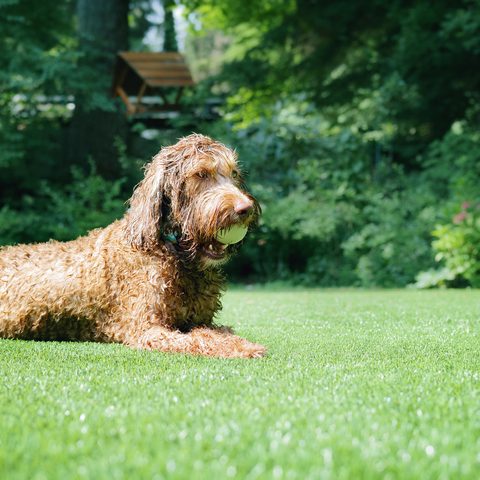
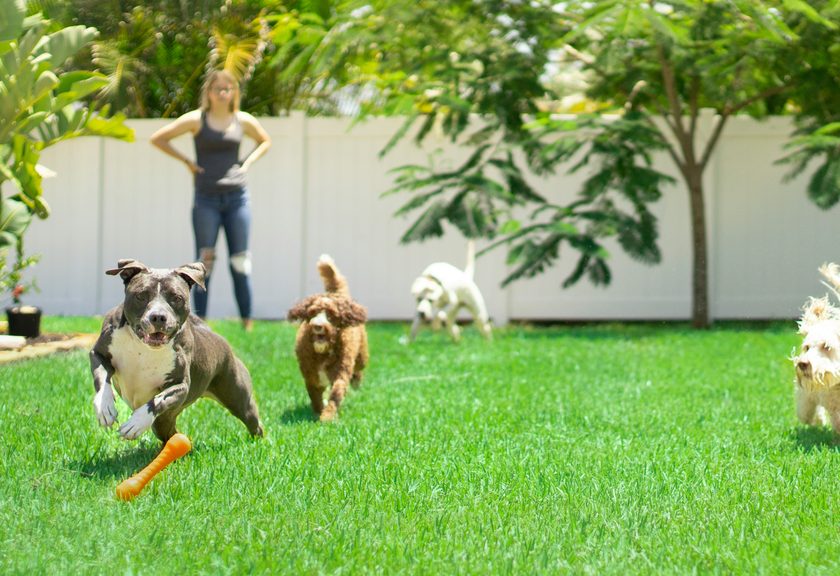
Bare dirt along the fence, a muddy track to the back door and brown spots by the patio are the signs that a yard could use pet turf. Here in Plano, that can mean anything from a small potty area to a full-length dog run, and Plano Turf Co. quotes both.
Heavy clay makes dog yards harder. After a storm it turns to sticky mud that comes inside on four feet, and once it bakes dry it cracks. A turf area over a base that drains gives a dog somewhere to go in any weather.
Pet areas are put together a little differently from lawns, mostly in how they drain and how they are cleaned.
We come out, see where the dog actually spends its time, and give you a free quote.
Call 972-843-9703 or use the form. For a whole yard, the artificial grass lawns page is the place to start, and older turf that has failed is covered under turf repair.
Free quote. No obligation.
It tends to start with one of these:
If your dog digs, say so at the visit. The edges can be fastened more firmly, and the layout can steer around the spots the dog favors.
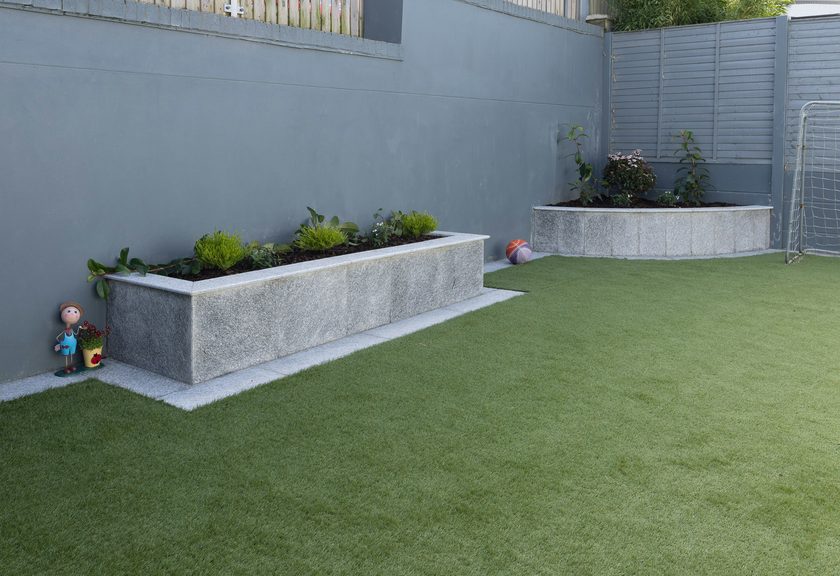
Some owners turf the whole backyard, and others keep living grass and give the dog its own corner. Both work. A smaller area is easier to rinse and keep fresh, while a larger one gives a young, busy dog room to run.
Shade, a water bowl and a gate that latches matter as much as the turf does. If you also want a green for yourself, look at backyard putting greens; dogs and greens can share a yard with a little planning.
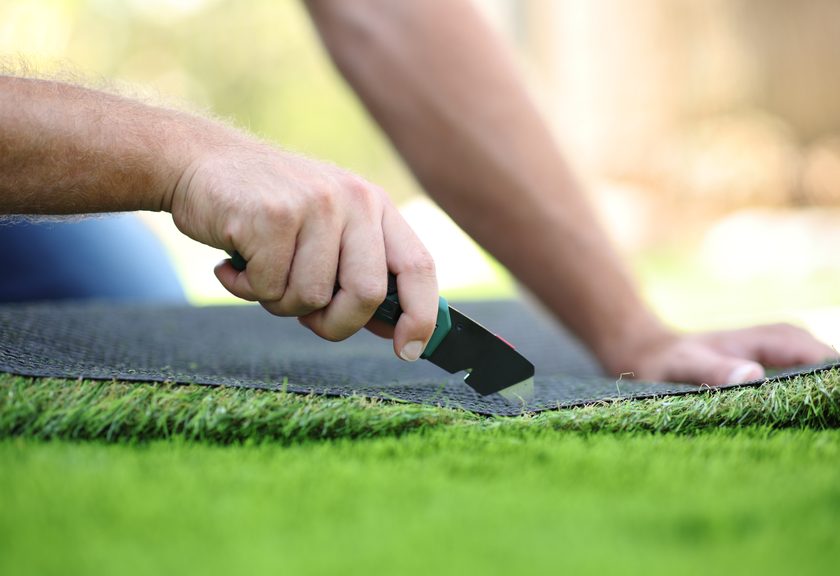
The steps match a lawn install, with a few changes that matter when animals use the area every day.
Urine and rinse water have to move down through the turf and the base and then away. Pet areas often use turf with a backing that lets water through across its whole surface, not only through punched holes, laid over a base that drains freely. On clay, the grade below that base still has to send water somewhere other than the foundation.
The sand or other infill between the fibers holds on to whatever lands on it, so pet areas often use an infill chosen with that in mind. Talk through the options at the visit, since products and opinions differ.
Dogs test edges. Along fence lines and gates, the turf tends to be fastened more often, and the border is set so a paw or a nose can’t easily lift it.
A potty area only needs to be big enough for the dog to use and close enough to the door that it gets used. A run tends to follow the path the dog already takes.
Dogs feel turf heat through their pads. A pet area that gets afternoon sun works better with shade over part of it, whether from a tree or a patio cover, and with a full water bowl close by. On the hottest days, a rinse before the dog goes out helps for a while, and so does checking the surface with your own hand.
Over time, the infill in the busiest spots wears down or washes out. Topping it up, along with a deeper cleaning now and then, keeps the area in good shape.
Most pet areas are smaller than lawns, but the drainage work can add to the job. We price it after seeing the yard, and the visit and quote are free. What changes the number:
Call 972-843-9703 for a visit, and have the dog around so we can see where it goes.


Most dogs adjust once they learn the spot. Walk them to the new area on a leash for the first several days and reward them there.
Close enough that the dog will use it in rain and cold, and far enough from doors and windows that you aren’t living beside it. Some afternoon shade makes it more pleasant in summer, and a spot that drains away from the slab is easier to keep clean.
Yes. Narrow runs are among the most common pet jobs. The main questions are where the water drains and how the run meets the gates.
Look at the route between the door and the turf. If the dog still crosses bare clay to get there, the mud comes along. Running the turf up to a patio or walk, or setting stepping stones across the gap, closes that route.
Tired of muddy paws? Call 972-843-9703 or use the form.
Notes on Plano clay, watering days and HOA approval sit on the home page. To reach us, try the contact page.